

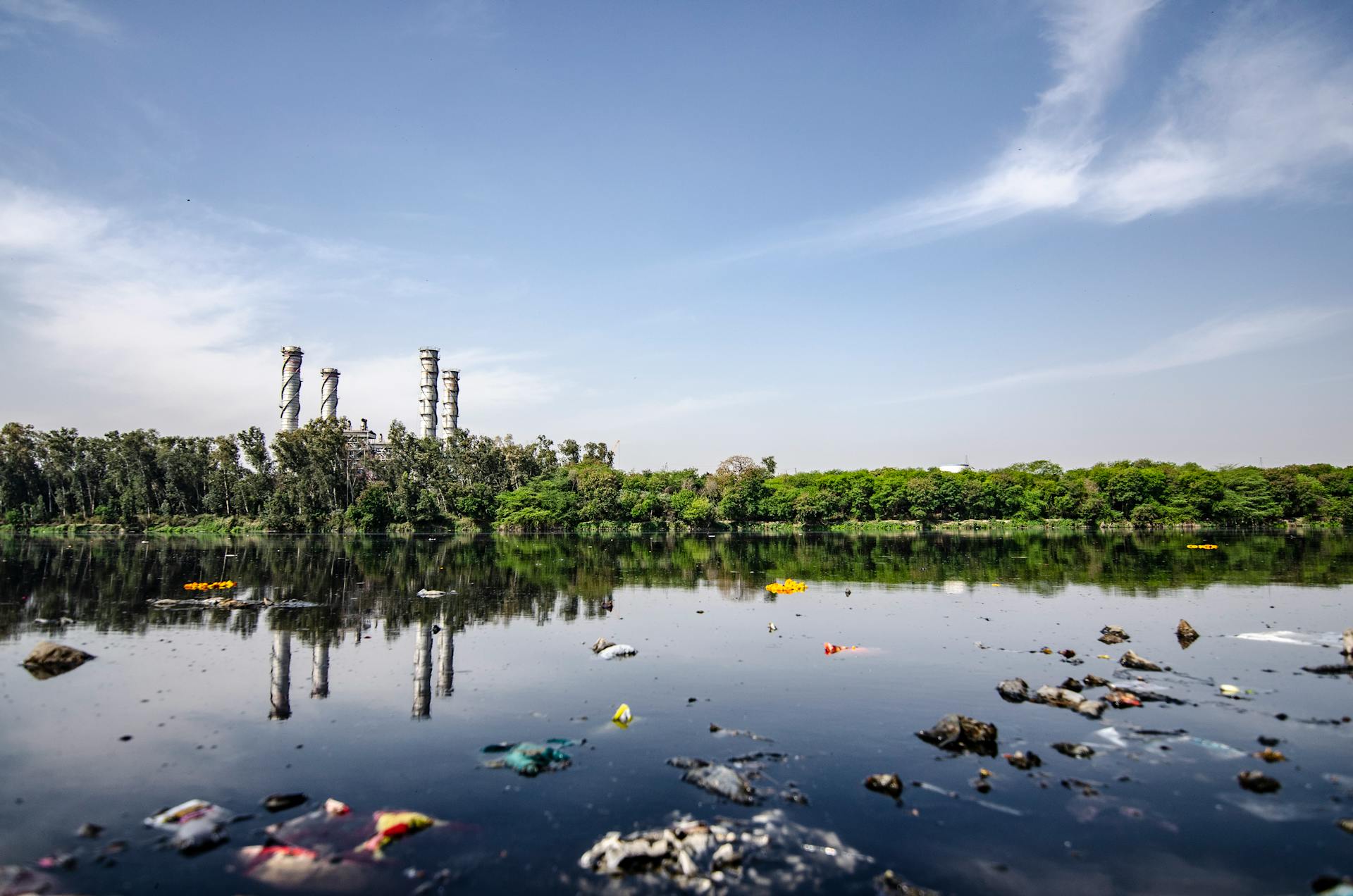
Identify and report pollution of sites and soils
In case of pollution or risk of soil pollution, the first step is to react quickly and in accordance with environmental regulations. Time plays a key role: the sooner pollution is identified, the more effective the containment and depollution measures will be and the less likely it will be to spread.
Identifying pollution: environmental diagnosis and analyses
When soil shows signs of contamination—oil stains, abnormal odors, presence of heavy metals, industrial residues or buried waste—it is imperative to carry out a complete environmental diagnosis.
This diagnosis is usually left to a certified design office (such as those approved by COFRAC or referenced by the Ministry of Ecological Transition). It includes:
- one historical study of the site (former use, industrial activities, ICPE);
- Of sampling and analysis of soil, groundwater and sediments ;
- one health and environmental risk assessment.
This data makes it possible to determine the nature, location and extent of pollution as well as the emergency measures to take (confinement, pumping, neutralization, etc.). The results then guide the depollution or management strategy adapted to the future use of the site.
Mandatory reporting to the authorities
According to the Environmental Code (articles L.556-1 and following), any person — owner, operator or third party — who is aware of pollution must inform the competent authorities immediately.
The purpose of this report is to ensure the public health protection and to ensure a administrative follow-up of the site.
The report should be sent to:
- The prefecture, in particular at Department in charge of polluted sites and soils or at the DREAL (Regional Directorate for the Environment, Development and Housing);
- The Departmental Directorate of Territories (DDT) for the opening of a follow-up procedure;
- The Town hall of the place concerned;
- and, where appropriate, to the inspection of classified installations (ICPE) if the pollution results from industrial activity subject to this regime.
The authorities can then expedite controls, impose safety requirements or ask for additional studies to be carried out. This report, far from being a simple formality, conditions the legality of site management And the legal responsibility of the owner or operator.
Importance of a quick and documented response
Each observation, analysis and communication with State services must be rigorously documented.
It is recommended to:
- keep the expert reports And the laboratory analyses ;
- archive the written exchanges with the administration (receipts, emails, reports);
- Have pollution detected by a bailiff when possible.
This documentation constitutes a essential proof in case of litigation (liability of the polluter, claim for compensation or defense against an administrative complaint).
At the same time, it is often a good idea to consult a lawyer specialized in environmental law as soon as possible, in order to guide procedures, prevent risks of misconduct and ensure compliance with legal reporting obligations.
Legal responsibilities and legal obligations of actors
In terms of pollution of sites and soils, French law is based on a fundamental principle: “the polluter pays”. This principle, enshrined in article L.110-1 of the Environmental Code, requires anyone responsible for pollution to take responsibility for its repair. The law therefore strictly regulates the hierarchy of responsibilities, the obligations to clean up pollution and the powers of intervention of the administration.
The hierarchy of managers
When soil pollution is detected, responsibility is assessed in a specific order:
- The operator or the former operator is the first person responsible.
It is the natural or legal person who carried out the activity that caused the pollution. It is required to carry out the necessary depollution work, whether it is an industrial site, a logistics warehouse or a service station. - The producer or holder of the waste may also be implicated.
When contamination results from the irregular deposit or treatment of waste, liability extends to the person who produced or held it, in accordance with article L.541-2 of the Environmental Code. - The owner of the land is only responsible in a subsidiary capacity.
It can be searched if a Characterized neglect Or a direct involvement in pollution is demonstrated — for example, in the event of inaction in the face of known pollution or careless exploitation.
This hierarchy, resulting in particular from the ALUR law (law for access to housing and renovated urban planning) of 24 March 2014, aims to prevent the burden of pollution control from falling unfairly on non-responsible landowners.
Depollution and rehabilitation obligations
The person responsible for a pollution is required to rehabilitate the site, under conditions that allow for future use compatible with health and environmental safety.
This obligation may consist of:
- one complete rehabilitation (soil excavation, treatment or containment);
- or the implementation of management measures limiting the risks for populations and the environment.
The refurbishment must be proportionate to the future use of the land : the requirements will be different depending on whether it is an industrial, agricultural, residential site or a sensitive area (school, hospital, groundwater).
The work is carried out under the supervision of the prefecture and the services of the DREAL, which can impose a management plan Or a Prefectural decree of rehabilitation.
Execution ex officio by the administration
In the event of inaction by the person responsible, the administration has extensive powers to ensure pollution control.
In accordance with article L.512-21 of the Environmental Code, the prefect can:
- Prescribe the work safety and pollution control;
- The Do it automatically if the manager does not comply in a timely manner;
- and claim full reimbursement of costs incurred.
This ex officio execution guarantees the protection of public health, but can involve considerable costs for the person responsible identified. Otherwise, these costs may be recovered from the owner of the land, if he contributed to the pollution or was negligent.
The contribution of the ALUR law and the Environmental Code
La ALUR law (article L.556-1 et seq. of the Environmental Code) has strengthened transparency and information obligations related to polluted sites.
In particular, it requires:
- the creation of a National Register of Polluted Sites and Soils (BASOL), available to the public;
- the obligation, for the seller of land located in the Soil Information Sector (SIS),inform the purchaser existing pollution and imposed management measures;
- The production of environmental certificates (ATTES-ALUR type) during certain real estate transactions.
These provisions aim to avoid the transmission of uncontrolled environmental risks and to guarantee the traceability of polluted sites over the long term.
Administrative procedures to be taken for pollution control
When soil pollution is confirmed, the implementation of a pollution control procedure must follow a specific administrative framework, defined by the Environmental code and instructions from the Ministry of Ecological Transition. The objective of these procedures is to ensure the legal, environmental and health security of the operation.
Declaration and opening of the administrative procedure
The first step is to inform without delay the competent authorities:
- The prefecture, via the service in charge of polluted sites and soils or the DREAL ;
- The Departmental Directorate of Territories (DDT) ;
- The Town hall of the place concerned;
- and, where appropriate, ICPE inspection if the pollution comes from a classified activity.
This report allows the administration to List the site and to open a Instruction procedure. Checks and expertise may be prescribed to determine the origin, severity and risks associated with pollution. In the event of serious and immediate danger, emergency measures (confinement, pumping, evacuation) may be imposed.
Studies, diagnoses and management plan
The manager (or the owner concerned) must have several regulatory studies, in accordance with the technical standards defined by the Ministry:
- one historical and documentary study of the site;
- one initial diagnosis including samples and analyses;
- one quantitative health risk assessment (EQRS) ;
- And a management plan detailing the possible pollution control scenarios.
Based on this, a rehabilitation program is developed. It specifies the techniques used (excavation, confinement, biological treatment, phytoremediation, etc.), the Phasing of work, the management of excavated soil And the post-treatment follow-up.
Administrative requirements and necessary authorizations
Depending on the severity of the pollution and the nature of the site, the prefecture can:
- Take a Prefectural decree prescribing the carrying out of pollution control work;
- require periodic checks and progress reports;
- or condition the reuse of the site to the production of environmental certificates (ATTES-ALUR type).
At the same time, some operations require specific permissions :
- authorization under classified installations (ICPE) ;
- Construction site declaration or environmental permit ;
- authorization of transport and disposal of waste to approved courses.
Compliance with these steps conditions the legality of the pollution control site and protects the project owner against possible administrative sanctions.
Management and prevention measures after depollution
Once the work has been carried out, the site must be subject to a technical reception And of a post-rehabilitation environmental monitoring.
Authorities may require:
- Of restrictions on use (ban on construction or agricultural activities);
- one regular monitoring groundwater and soil;
- Of annual checks to verify the effectiveness of containment or treatment.
The sustainable management of polluted sites is based on an approach of ongoing prevention. Businesses and owners are encouraged to adopt a strict traceability of their risky activities, in order to avoid any reappearance of contamination.
Remedies and legal defense in case of pollution
In the presence of pollution or environmental litigation, several remedies may be engaged, depending on whether one seeks to Get the polluter punished or at defend yourself from being questioned.
Civil remedies
In accordance with article 1246 of the Civil Code, any person responsible for a ecological damage must fix it.
The judge may order:
- The rehabilitation of the site (primarily in kind);
- the payment of damages when reconditioning is not possible.
Victims (individuals, communities, approved associations) can request compensation from their material, moral, or environmental damage.
Criminal remedies
Pollution offences are punishable by the Environmental code And the Penal code.
Penalties can range up to:
- 2 years of imprisonment for responsible leaders;
- €750,000 fine for legal entities;
- 10 years of imprisonment, in case of Offence of ecocide.
Les approved environmental protection associations can form a civil party to trigger public action. La Criminal transaction is also possible in the least serious cases, to avoid a lawsuit while repairing the damage.
The decisive role of the lawyer in environmental law
Faced with the increasing complexity of regulations and the severity of sanctions, the use of a environmental law lawyer is essential from the very first stages.
The lawyer intervenes to:
- analyze legal obligations of the owner or operator;
- secure exchanges with the administration and DREAL;
- prepare notification, authorization or grant files ;
- defend the company or the individual in the event of a complaint;
- and Involve civil or criminal remedies necessary to enforce the polluter pays principle.
Its support guarantees the regulatory compliance of the depollution process and the legal protection of its customers.
Conclusion
The management of a pollution of sites and soils does not tolerate approximation or delay. Each stage — from diagnosis to post-rehabilitation follow-up — must be carried out rigorously, in compliance with the Environmental code and administrative requirements.
The principle polluter pays ensures that the burden of pollution control lies with the person who is really responsible, but its implementation requires a detailed knowledge of law and procedures.
In practice, act quickly, document each action and be assisted by a specialized lawyer remains the best strategy to secure procedures, limit financial risks and contribute to the sustainable preservation of the environment.
sourcing
- Environmental code, Chapter VI: Polluted sites and soils (articles L.556-1A to L.556-3) — www.legifrance.gouv.fr
- Ministry of Ecological Transition — Polluted sites and soils: principles and approaches (www.ecologie.gouv.fr)
- ALUR law of 24 March 2014 — Obligation of transparency and pollution control
- ADEME — Methodological guide for the management of polluted sites
.svg)
.svg)